

Somewhere in your customer base, there is a shopper who buys your product every week. They have been doing it for three years. They might be your highest-LTV customer, and your loyalty program has never met them.
She buys at Target. He picks it up at Sephora. They reorder on Amazon. None of these transactions show up in your loyalty program, because none of them happen on your DTC site.
This is the structural blind spot inside almost every loyalty program built in the last decade. The customers a brand knows about are the ones who shop where the brand can see them. The customers who matter most may actually be ones the brand has never recognized at all.
The technology to close that gap now exists, and the brands that adopt it first will define what omnichannel loyalty truly means.
What is an omnichannel loyalty program?
An omnichannel loyalty program recognizes and rewards a customer wherever they buy from you. That's the whole definition. The customer's identity, status, and points balance travel with them across your DTC and in-store environments, and you identify and recognize their purchases from third-party retail channels so that you can also reward them for those loyal behaviors. The customer can earn for a Target or Sephora purchase the same way they earn for a Shopify checkout, in the same loyalty program, with their rewards added to the same balance and supporting the same loyalty flywheel that your brand is investing in.
That is the meaningful distinction between multi-channel and omnichannel. Multi-channel means a brand sells in many places. Omnichannel means the brand recognizes the customer in many places. Most brands have built the first half. Very few have built the second.
Why most loyalty programs are really DTC reward programs
The technical reason is simple. A loyalty platform can only reward purchases it can see, and historically the only purchases it could see were the ones flowing through channels it was directly integrated with: the brand's Shopify store, the brand's mobile app, the brand's POS system.
The strategic consequence of this siloed customer understanding is harder to swallow. For consumer brands that earn most of their revenue through retail (CPG, beauty, food, beverage, household goods), their online loyalty program is built around what is potentially the smallest slice of their customer relationship. Most of the customer's actual purchase behavior happens somewhere the program doesn’t typically reach, and the DTC loyalty experience is built on the minority of the customer’s total relationship and investment with the brand.
From DTC loyalty to total customer loyalty
A customer loyalty program, in the fullest sense of the term, recognizes the customer wherever they shop. Their points balance reflects their actual total relationship with the brand. Their VIP status reflects their actual spend with the brand.
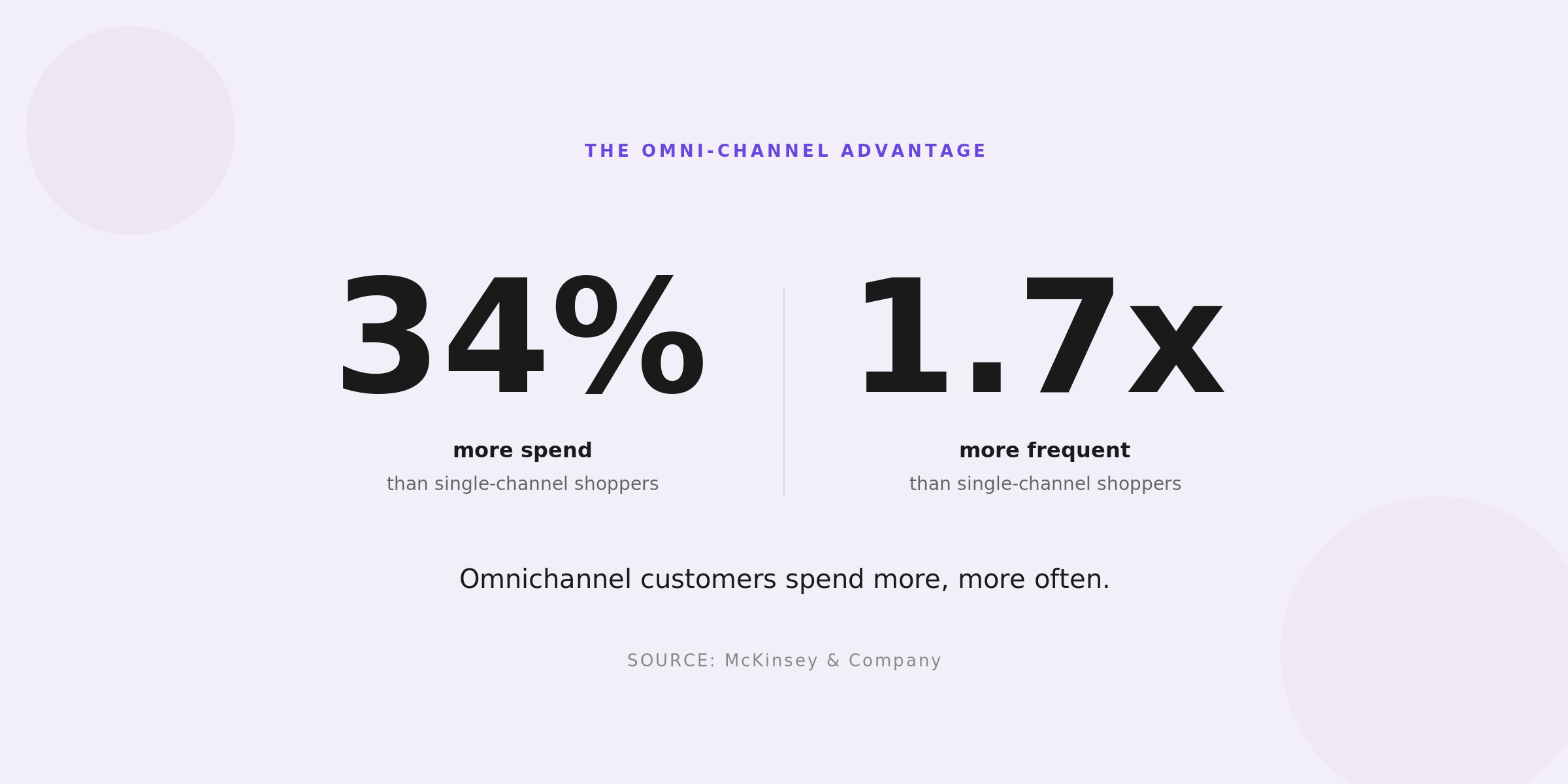
The business case for this unified loyalty view is well documented. McKinsey research found that omnichannel customers spend 34% more and shop 1.7 times more often than single-channel shoppers. The reason is structural. Customers who feel recognized across the full surface of their relationship with a brand become more committed, faster.
Recognizing the customer across channels has been a missing piece for digitally-native brands. Until recently, brands had two unattractive options: build something custom and fragile, or…just wait and ignore the problem. However, a new generation of integrations is closing that gap.
How to reward purchases made at Target, Walmart, or Sephora today
This is where the practical work begins. Smile and Subtotal have built an integration that lets brands recognize and reward third-party retail purchases alongside the standard DTC loyalty programs.
The mechanism is simpler than most teams expect. A shopper links their retailer account (Target, Walmart, Sephora, Amazon, and others), authorizing the brand to receive their purchase data through Subtotal. From there, qualifying purchases at those retailers are identified by Subtotal and posted into Smile as points transactions with a customer-facing description like "Retail purchase," appearing in the same activity feed as the customer's DTC orders, and rewarding the customer at the same earning ratios.
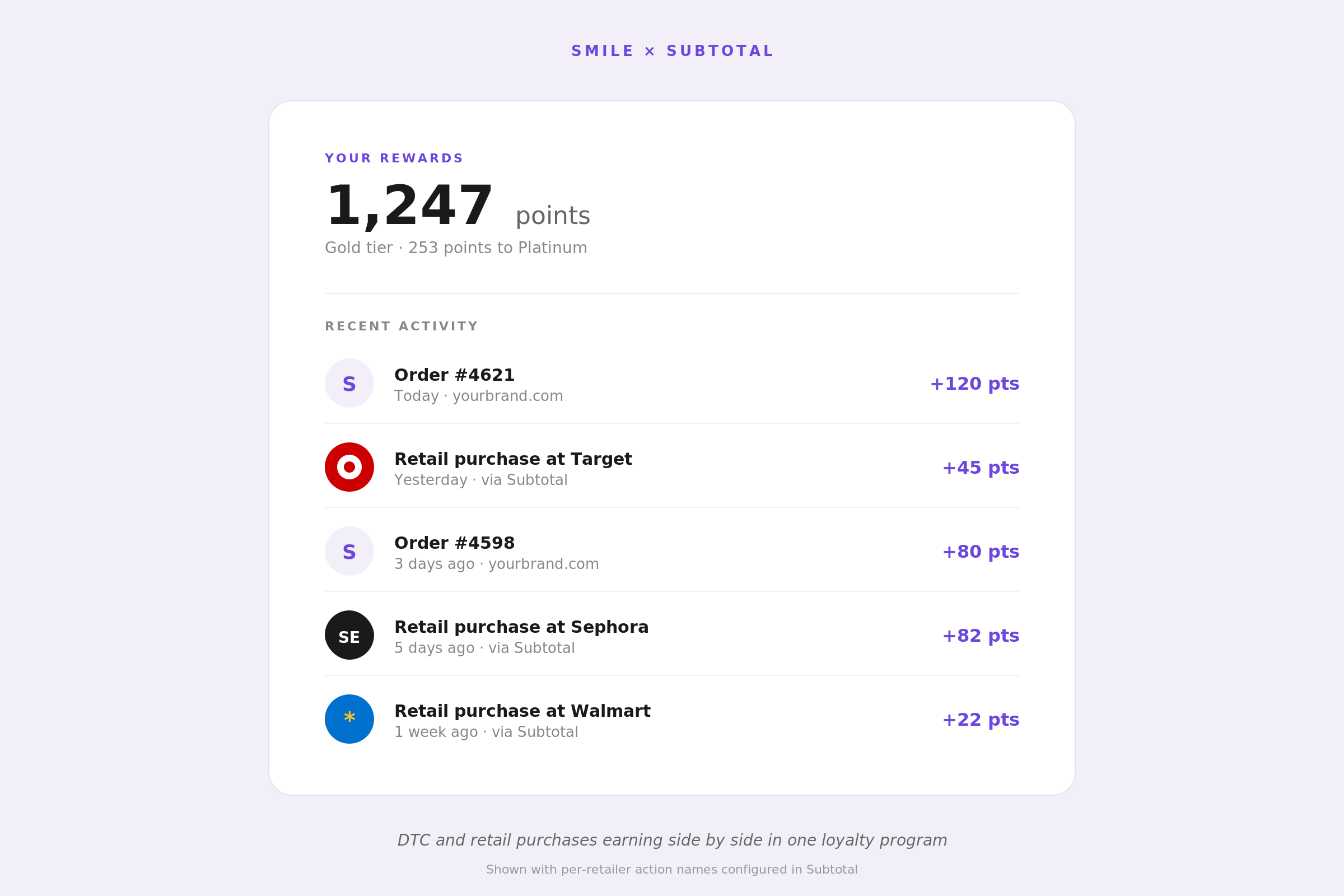
Two earning moments live inside this flow itself. The first is the act of retail account linking. Brands can reward customers by awarding loyalty points when they make this account connection with each retailer. This gives customers a strong incentive to opt-in and helps the brand capture first-party retail data on a real consent basis.
The second earning moment is per-purchase with each linked retailer. Every qualifying transaction at a linked retailer earns at whatever rate the brand sets. If a beauty brand sells product in both Sephora and Ulta Beauty, and their online customer uses Subtotal to link both of those accounts to their online loyalty program with Smile, then the customer earns points every time they make a purchase from either retailer.
From the customer's perspective, there is no second loyalty program, no second balance to manage, no separate login. One loyalty program finally sees them and rewards their brand loyalty across channels.
What this unlocks for CPG, beauty, and food brands
For ecommerce brands that also live in retail, this is the closest thing to a foundational change in how omnichannel loyalty programs are built.
Full LTV visibility is the first unlock. The customer who looks like a casual two-order DTC shopper might actually be a weekly buyer at Walmart. Once those purchases are visible, retention strategy can be built on the relationship that actually exists, not the partial one the brand was working from.
Marketing efficiency follows. Brands stop spending acquisition dollars to re-acquire customers they have technically had for years. They stop building retention campaigns on a fraction of the relationship. They stop offering bottom-of-funnel discounts to customers who would have come back anyway, because those customers already do come back, just not through the channel the brand was watching.
Sharper product decisions get layered on top. Retail purchase data flows back to the brand at the SKU level. The brand sees which products travel together in a Target basket, which retailers index toward which buyer profiles, and where category trends are shifting before quarterly retailer data arrives.
All of that brand-side data flows into one ultimate test: does the customer feel recognized. A loyalty program that sees the whole relationship lets the customer experience it as one. One identity. One balance. Status and rewards that reflect every interaction with the brand, not just the ones that happened to flow through DTC. That is what an omnichannel loyalty program looks like when it is actually working. The brand sees the whole customer and the customer feels recognized for the whole relationship.
Three questions for loyalty leaders to bring to their team this quarter
Anyone running loyalty, retention, or CRM at a consumer brand should be able to answer these critical questions.
What percentage of our customers' purchases happen in channels we cannot currently see? For most CPG and beauty brands, the honest answer is the majority. That number is the size of the blind spot.
What would it look like to recognize and reward those customers inside our existing program? Not a separate program. Not a manual upload. A single, unified experience where retail purchases earn the same way DTC purchases do.
What is the cost of waiting another twelve months? Each quarter the program runs without retail visibility is a quarter of underbuilt customer relationships, misallocated retention spend, and unrecognized high-value buyers. The compounding cost is rarely on a slide. It is still real.
Build a loyalty program that sees the whole customer
The brands that define the next decade of omnichannel loyalty will not be the ones with the cleverest tier names or the highest point multipliers. They will be the ones whose programs reflect the way customers actually shop.
Smile customers can plug Subtotal into their existing program and start recognizing retail purchases from day one.
If you're leading loyalty, retention, or CRM at a consumer brand and want to see what an omni-channel loyalty program looks like in practice, talk to our team. We will walk through the setup, the customer experience, and the data implications for your category.


