

Many brands running subscriptions invest heavily to land a new subscriber, then treat the relationship as solved the moment the first box ships. But staying subscribed is its own decision, made over and over, and it takes a different kind of program to keep earning a yes. Smile built an integration with Stay AI to make that possible.
What is a subscription loyalty program?
A subscription loyalty program rewards a customer for staying subscribed, not just for buying. A standard ecommerce loyalty program earns points per order and stops there.
In a subscription model, the customer isn't deciding to buy again each cycle. They're deciding whether to stop. A subscription loyalty program puts something on the other side of that decision: points that accumulate the longer a customer stays subscribed, a VIP tier that reflects the length and value of the relationship, and rewards that make skipping a shipment or canceling feel like it comes with a cost.
Why subscriber churn is quietly expensive
McKinsey's research on ecommerce subscription consumers found that close to 40% of ecommerce subscribers have canceled a subscription. More than a third of those cancellations happen within the first three months, and over half happen within six.
Replenishment subscriptions, the category most DTC subscription brands compete in, do better than curation boxes. But even the strongest replenishment programs retain only 45% of subscribers past the one-year mark, per the same research. More than half of subscribers who sign up for a recurring order never make it to year two.
Fixing even a fraction of that churn changes the math on a subscription business, and it starts with what happens inside the subscriber's portal.
How Smile and Stay AI work together
Stay AI is a subscription and retention platform built for Shopify brands, designed to reduce subscription churn through tools like AI-optimized cancel flows and automated winbacks. Its customer portal is where subscribers manage their recurring orders: skipping shipments, swapping products, pausing, or canceling. Smile's integration puts loyalty data inside that same portal.
Specifically, a subscriber's Smile points balance, VIP tier, and referral URL display directly inside the Stay AI customer portal. Points earn automatically on subscription orders, and subscribers can redeem them for a discount on an upcoming box. The integration works with Smile's Points, VIP Tiers, and Referrals features, and it's available on every paid Smile plan.
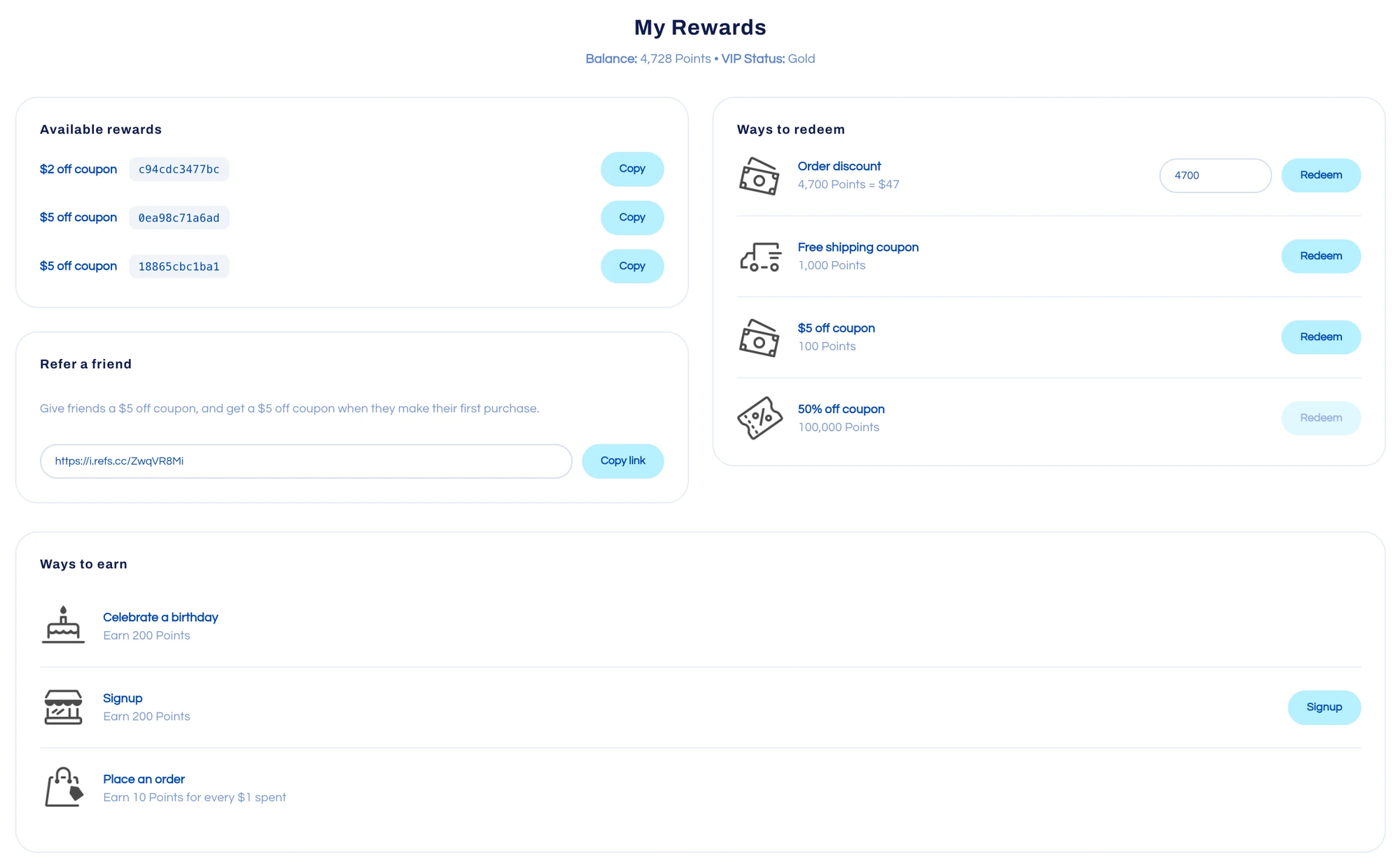
The effect: the portal a subscriber visits to manage their subscription becomes the same place they see, in real redeemable terms, what staying subscribed is worth.
What happens at the moment a subscriber considers canceling
A subscriber logs into the portal to skip a shipment, or to cancel outright. Without a loyalty layer, that screen shows only subscription controls: skip, swap, pause, cancel.
With Smile and Stay AI connected, the subscriber sees their points balance and how close they are to their next VIP tier in that same view. A subscriber sitting 150 points from Gold tier is looking at a different decision than a subscriber with no visible stake in staying. Canceling now means giving up progress already built. Skipping instead of canceling keeps that progress alive.
Stay AI's own product data shows this kind of intervention works at scale. Its dynamic cancel flows recover up to 40% of would-be cancellations before they happen. Loyalty gives that cancel flow something concrete to offer beyond a generic discount: status the subscriber has already earned and doesn't want to lose.
Why loyalty makes retention tech more effective
The closer someone gets to finishing a goal, whether it's a punch card or a points balance, the harder they work to close it out. A VIP tier sitting just out of reach isn't a marketing gimmick. It's a concrete reason to keep a subscription active one more cycle.
That data compounds for the brand, too. A subscriber's proximity to a tier threshold is a retention signal a brand can act on before a cancellation happens, not after. Instead of running the same generic winback discount on every at-risk subscriber, a brand can see which subscribers have the most to lose and calibrate the offer accordingly. That's a sharper, cheaper way to spend retention budget than blanket discounting.
But the reason this matters isn't really about the data. It's about what the subscriber feels when they open that portal. A subscription that only shows a price and a cancel button feels like a bill. A subscription that shows a points balance, a tier, and a reward within reach feels like a relationship the subscriber is building, not a charge they're tolerating. All of that brand-side data flows into one test: does the subscriber feel recognized for staying, or just billed for staying.
What this looks like at scale
Stay AI's own case study with OLIPOP is a useful reference point for what retention infrastructure can do for a subscription brand on its own. After moving onto Stay AI, OLIPOP grew subscription revenue by 35% and cut active churn by 26%.
Stay AI's retention tooling can produce that on its own.. Adding Smile's points, tiers, and referrals on top doesn't replace that work. It gives the subscriber a reason to value the relationship beyond the product itself. For mid-market and enterprise DTC subscription brands running programs at real scale, the two are complementary: Stay AI handles the mechanics of keeping a subscription alive, and Smile gives the subscriber something to be loyal to.
Questions for subscription and retention leaders to bring to their team this quarter
What percentage of our active subscribers are within reach of a loyalty milestone, and are we surfacing that anywhere they'd see it before they cancel? If the answer is nowhere, that's an easy fix with more retention value than most winback campaigns.
Is our cancel flow offering a generic discount, or something the subscriber has already earned and doesn't want to lose? Those are different offers with very different acceptance rates.
Do we know our subscriber churn rate by cohort tenure, the way McKinsey's research breaks it down? Most brands can answer their overall churn rate. Fewer can say whether their three-month or six-month cliff looks better or worse than the industry benchmark.
Build a subscription program subscribers don't want to leave
A subscription loyalty program isn't a new product. It's a different way of using loyalty infrastructure a brand may already have, applied to the moment that actually determines subscriber lifetime value: the decision to stay subscribed one more cycle. Review our set up guide to get started with the Smile x Stay AI integration.
If you're leading subscription, retention, or CRM at a consumer brand running recurring revenue at scale, talk to our team at Smile. We'll walk through the Stay AI setup, the customer experience inside the portal, and what a subscriber-facing loyalty layer does to your churn numbers.
