

In Short
Black Friday and Cyber Monday bring thousands of first-time buyers to your store. But once the rush is over, the challenge is turning those one-time purchases into repeat orders. Open Klaviyo, and many of these customers look alike: one order, a discount code, and little purchase history to guide your next message.
But their next move can tell you much more. One shopper might return to compare sizes. Another might check your return policy before buying again. Someone else explores a new category without opening a single email.
These actions reveal quiet intent: signs that a shopper is considering another purchase before triggering a marketing flow.
This guide shows you how to identify those signals, connect them with your loyalty program, and build a 60-day plan to drive second purchases without relying on another blanket discount.
BFCM is the peak of the volume era
During BFCM, your retention strategy focuses on reach. You send more campaigns, offer deeper discounts, and focus on converting as many shoppers as possible.
But bringing that approach into December can make it harder to drive a second purchase. First-time buyers enter the same post-purchase flow, receive similar recommendations, and get another discount around day 30, regardless of how they've interacted with your brand since their first order.
After BFCM, your retention strategy needs to shift from audience-first to shopper-first. Instead of treating everyone who bought in November as one segment, look at what each shopper does after their first purchase. Their browsing activity, purchase history, and loyalty engagement can tell you what they're interested in and help determine what to send next.
You don't need an enterprise-sized team to start. Your loyalty program already gives you useful information about each customer, including their points balance, reward activity, and VIP tier. Combine that with purchase history and on-site behavior to build a more complete picture of what each shopper might need next.
Start with three types of information:
These signals give you a starting point for more relevant post-purchase communication. Tie Predict adds another layer by scoring shoppers across Purchase Intent, Open Intent, and Click Intent, with scores refreshed daily.
Your team can use these signals to prioritize audiences based on their likelihood to buy, open, or click, helping you increase send volume. For example, Sharper Image increased revenue per recipient by 41% while sending 22% fewer emails with Tie Predict.
Quiet intent: The signals behind a second purchase
A shopper’s next purchase often starts with activity that never registers as an email click. They return to your site from another device, revisit a product they bought, or check their loyalty points before deciding what to order next. These behaviors can signal renewed interest, even when they don't appear in your existing email engagement data.
Your email platform can only act on shopper activity it can connect to a profile. Klaviyo natively recognizes 22% to 36% of returning shoppers, while Tie can recognize 90% to 100%. This leaves a significant gap in the shopper activity available to inform your segments and flows.
Beekman 1802 generated $520,947 in revenue over three months by reactivating more than 80,000 returning shoppers Klaviyo wasn’t recognizing. Identifying these shoppers gave the brand an opportunity to reach customers previously missing from its email activity.
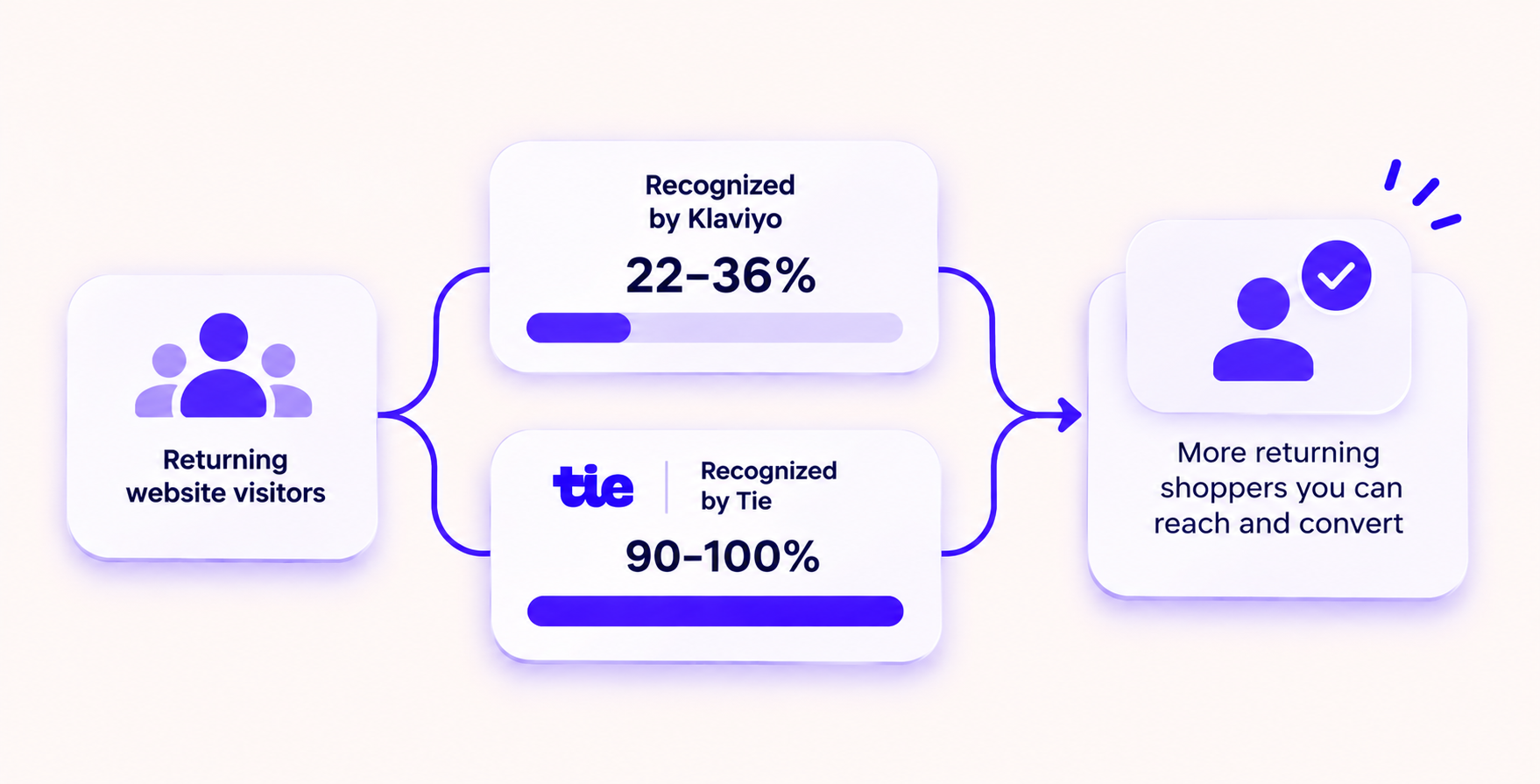
Once you can recognize these shoppers, you can use their behavior to inform your next message. Here are some common signals to look for and how to connect them with your loyalty program:
| Quiet signal | What it could indicate | What to send |
|---|---|---|
| Returns to the product page of an item they bought | Considering another size, a replenishment, or a second color | A size or reorder reminder, with their available points |
| Browses a related category | Interest in complementary products | Relevant product recommendations and their progress toward the next VIP tier |
| Checks their points balance or rewards page | Looking for a way to redeem points | A reward reminder paired with products they can buy using those points |
| Reads the shipping or returns policy | Needs more information before ordering | A clear summary of the relevant policy and customer reviews |
| Buys a gift, then browses products for themselves | Ready to make a personal purchase | Recommendations based on their own browsing activity |
You can also use purchase readiness to decide which shoppers to prioritize. Tie Predict scores shoppers across Purchase Intent, Open Intent, and Click Intent, with scores refreshed daily. Combine these scores with recent browsing and loyalty activity to build segments and flows around both what shoppers are doing and how likely they are to engage or buy.
The second purchase playbook: Days 0 to 60
Your BFCM follow-up should give every first-time buyer a clear reason to return. Over the next 60 days of BFCM, use purchase history, loyalty activity, and shopper behavior to shape your follow-up. As customers show new signs of interest, adjust your messaging to reflect what they're considering.
Hold the discount
Welcome first-time BFCM buyers to your loyalty program. Show them how many points they earned on their first order, which rewards they can claim, and how they can use their balance toward another purchase.
Review engagement with your post-purchase emails before sending more promotions. Reduce broad sends to disengaged shoppers after the BFCM surge. This helps protect your sender reputation and maintain healthy engagement as you transition out of the BFCM sending surge.
Smile’s loyalty approach gives you ways to motivate another purchase through points, rewards, and tier progress. These incentives also help reduce your reliance on repeated discounts, which can train customers to wait for the next sale.
Trigger on intent, not the calendar
A fixed day-30 email gives every customer the same follow-up, regardless of what they've done since their first purchase. Instead, build flows around returning visits and product browsing so your messages reflect what each shopper is considering.
Use Smile's Klaviyo integration to include information about your shopper’s loyalty status within your messages. A member who revisits a product page could receive relevant product details alongside their current points balance.
Prioritize shoppers by readiness
By this stage, customers will have shown different levels of interest in buying again. Use browsing activity and purchase-readiness scores to determine which follow-up is most relevant:
Treat gift buyers as their own cohort
Customers who bought gifts during BFCM may have different reasons to return. Their next purchase should reflect their own interests, not the preferences of the gift recipient.
Invite them to join your loyalty program, collect their birthday to set up a birthday reward, and use their personal browsing activity to inform future recommendations.
Connect in-store and online
Your in-store customers should be able to continue earning and redeeming loyalty points across both channels.
Smile’s Shopify POS can connect in-store purchases with online loyalty activity. Use this combined purchase history, alongside subsequent online browsing, to make follow-up messages more relevant.
Give shoppers a reason to return without another discount
Smile gives brands more ways to encourage repeat purchases while protecting margins. Remind members about points they've earned, show them how close they are to their next VIP tier, or offer bonus points on a future order.
Make these benefits visible in your post-purchase communication. When shoppers can see what they've earned and what they can redeem, they have another reason to return without waiting for the next discount.
Loyalty that responds to intent: Smile and Tie together
Smile manages your loyalty program, including points, VIP tiers, rewards, and challenges. Tie identifies returning shoppers across sessions and devices, and adds browsing behavior and purchase-readiness scores to their profiles.
When both platforms feed information into Klaviyo, you can combine loyalty data with current shopper activity to make your follow-up messages more relevant.
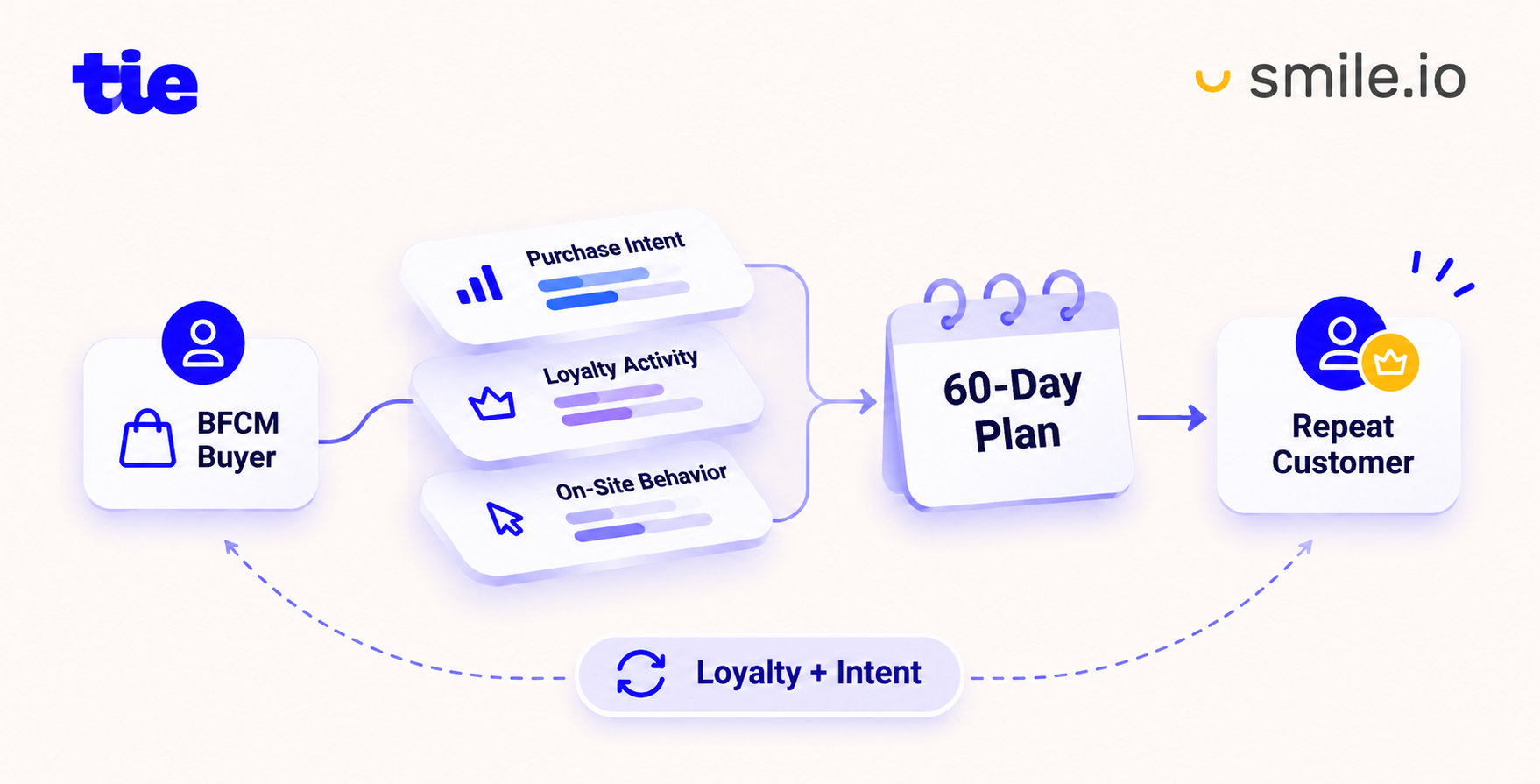
This brings shopper intelligence and Artificial Marketing Intelligence™ (AMI) together. Shopper intelligence gives you a clearer picture of each shopper, including their identity, loyalty status, browsing activity, and purchase readiness. AMI puts that information to work, helping you determine who to reach, when to reach them, and which message is most relevant.
Here are three ways to apply this to your loyalty program:
Both platforms also allow you to measure the impact of your marketing.
Smile uses promotional holdouts to measure the incremental lift from loyalty campaigns, while Tie measures its sends against held-out controls. Apply the same discipline to your combined strategy so you can determine whether messages informed by loyalty status and shopper behavior generate additional orders.
Test the results before expanding the strategy.
The year-end loyalty health check
Before planning your January retention campaigns, review how your BFCM cohort performed across these eight areas.
Use these checks to identify where customers dropped off, how dependent repeat purchases are on discounts, and whether your loyalty program is giving members a reason to return.
| Check | What to look at | Red flag | Where to find it |
|---|---|---|---|
| Repeat rate by cohort | 90-day repeat purchase rate of BFCM 2026 buyers compared with other first-time buyer cohorts | BFCM buyers have a lower repeat rate than other cohorts | Shopify Analytics |
| Discount dependency | Share of second orders placed with a discount code | Most second orders require a discount | Shopify orders |
| Program activation | BFCM buyers who joined the program, earned points, or redeemed rewards | Members earned points but never returned | Smile Analytics > Points Activity |
| Unredeemed points | Points held by inactive members | Large point balances belong to shoppers who haven't returned | Smile Analytics > Reports (Outstanding points over time) |
| Tier movement | Members who moved up a VIP tier during Q4 | Many members remain one purchase away from the next tier | Smile > Program > Activity (VIP activity) |
| Incremental lift | Loyalty promotions measured against a control group | Campaign results are reported without a holdout | Klaviyo holdout groups |
| Time to second order | Median time between first and second purchases | Scheduled follow-ups arrive before or after the cohort's typical second-purchase window | Shopify or Klaviyo |
| Shopper recognition | Share of returning website visitors your ESP can identify | Many returning visitors remain unrecognized in your email flows | Klaviyo or Tie |
Start with the points your BFCM buyers have already earned. Identify inactive members with unredeemed balances, and send reminders that show what they can claim and how to use those rewards toward their next purchase.
Points already earned are an existing incentive to purchase again. Use this review to identify where members aren't engaging with your loyalty program, address the gaps, and set your January retention priorities before increasing promotional activity.
Turn quiet intent into your next repeat order
Your BFCM cohort represents one of the largest groups of new customer relationships your brand will build all year. Their next purchase decisions are already taking shape through return visits, product browsing, and loyalty activity. The challenge is recognising those signals and acting on them.
Tie brings shopper recognition and purchase readiness together through Tie ID and Tie Predict, and uses AMI to help brands act on that intelligence through targeted outreach and Primary inbox placement. This gives your team a way to recognize more returning shoppers, understand their intent, and turn quiet intent into repeat purchases.
See how many of your returning shoppers Klaviyo can't recognize.
If you’re leading retention or CRM for a brand on Klaviyo, talk to our team at Smile about turning your BFCM cohort into repeat customers.
